
The history and roots of onigiri
When were rice balls first made and how were they eaten? Let’s start with the history and roots of onigiri in Japan.
The roots of onigiri go back to the Yayoi period.
They were used for Shinto rituals in ancient times.
The history of onigiri goes back to ancient times. The oldest traces are from the late Yayoi period (around the first to second centuries), and carbonized rice clumps that can be interpreted as triangular have been discovered at archaeological sites in Nakanoto, Ishikawa—in other words, onigiri fossils.
Japan developed as a country through rice farming, and rice is valued as a gift from the gods. For that reason, onigiri may have been used as offerings for religious ceremonies and festivals since ancient times.
After becoming highly valued as military rations for warriors, people began packing onigiri to take on excursions.
In the Heian period starting around 800 AD when the aristocracy was born, the nobility would give their servants balls of steamed glutinous rice called tonjiki, which are thought to be the origin of onigiri. This is also depicted in the Tale of Genji Scroll that has recently sparked great interest in the West.
Around that time, samurai sent to the countryside would carry dried boiled rice as a packed meal. Starting from the Kamakura period (1185–1333) and Warring States period (15th and 16th centuries) when the samurai power was growing, onigiri was cherished as military provisions for warriors heading to battle.
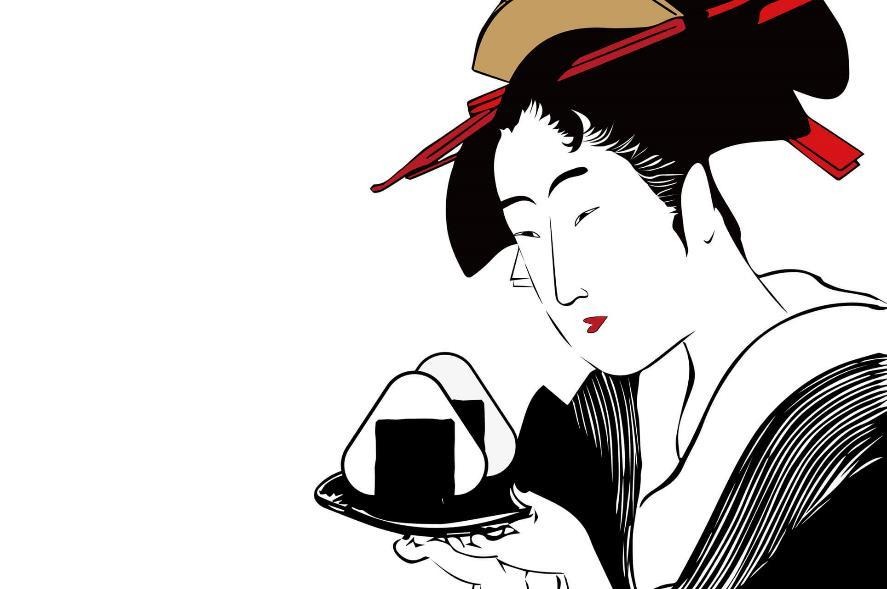
It was from the Edo period, when the Tokugawa shogunate established a period of peace throughout Japan, that onigiri evolved into the familiar presence it is today. Travelers began taking onigiri with them on their trips, and the Fujisawa illustrations of the Fifty-Three Stations of the Tokaido by Utagawa Hiroshige, a master of ukiyo-e, depict travelers eating onigiri while resting.
From the Meiji period, when Japan was becoming modernized, people would make onigiri at home and bring it with them on outings. Today, rice balls are often included not only in bento boxed meals taken on picnics and excursions but also in regular lunches at school or work.
Definition of onigiri
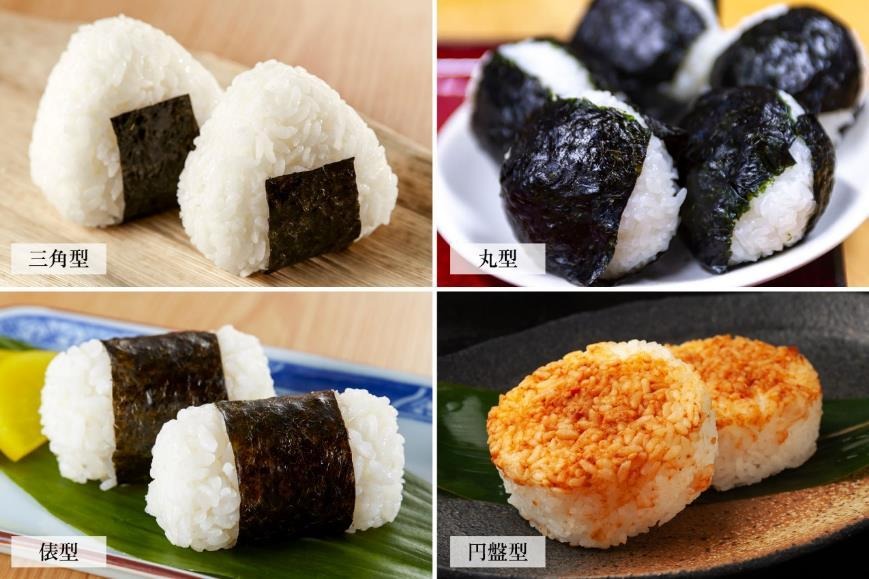
Onigiri refer to shaped cooked rice, but what is this exactly? In this part, we will define “onigiri.”
Onigiri shapes
Onigiri can be triangular, round, bale-shaped, or disc-shaped, and today there are even types such as onigirazu, which are shaped like a sandwich without being squeezed by hand. The shapes vary by region, and they are also called differently, such as omusubi and nigirimeshi.
Triangular onigiri in particular may pique the interest of many people in other countries because of the lack of other foods with such a shape.
Each type of onigiri has its own advantages. Triangular onigiri is less likely to fall apart and is easy to carry around. Round onigiri is easy to shape when using mixed rice with leafy vegetables or rice cooked with many ingredients. Bale-shaped onigiri is easy to pick up and eat with chopsticks or your hands. Disc-shaped onigiri is easy to cook when making grilled onigiri with miso or soy sauce on it.
In this way, you can shape onigiri in different ways to suit your purpose. Cooked rice also sticks together easily and can be made into any shape, so instead of shaping onigiri by hand, you can also use molds to create various shapes.
Onigiri and nori (seaweed)
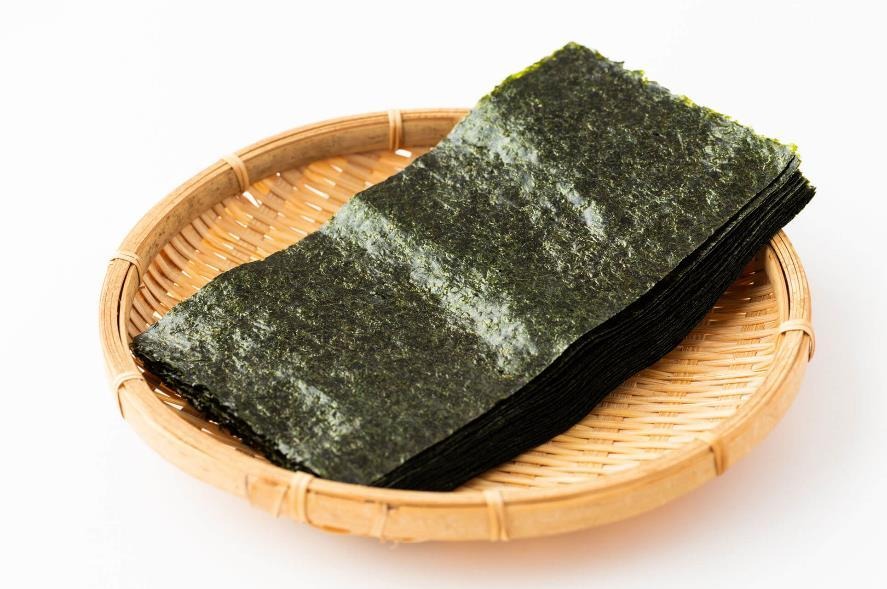
Nori (seaweed) is a big part of onigiri. Wrapping onigiri in nori adds the rich seaweed flavor of umami-flavoring amino acids, such as glutamic acid and inosinic acid, which bring out the flavor of the rice even more. If you wrap onigiri with nori right before eating, you can enjoy the crispy texture of nori and the rice will not stick to your fingers as easily. You can eat it easily like finger food, so it is great for lunch when you go on an outing.
There are also other types of onigiri that are not wrapped in nori. When eating simple shio musubi (salted onigiri), mazegohan (rice mixed with many ingredients), and rice that is seasoned and cooked together with other ingredients, you can taste the flavors directly without wrapping the rice in nori.
Incidentally, it was after World War II that it became routine to wrap onigiri in nori. The life history of nori was illuminated by British phycologist Kathleen Mary Drew-Baker in 1949. Japanese researchers and producers used her findings to further develop nori cultivation technology. Stable cultivation was achieved in around 1953, bringing nori to people’s homes and popularizing the style we see today of eating onigiri together with nori.
Onigiri fillings
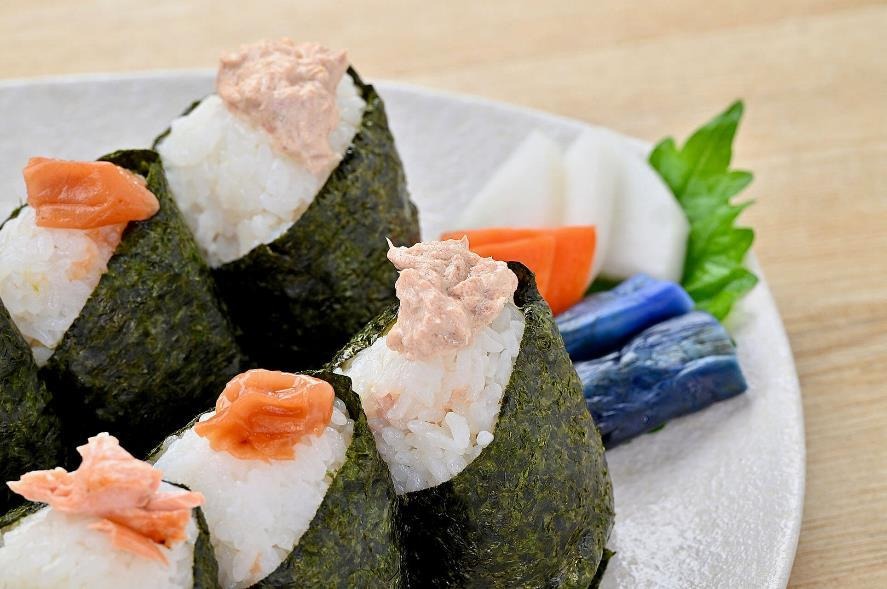
What types of onigiri fillings are there?
[Tuna mayo]
Tuna mayo is the most popular type among non-Japanese people. Canned tuna in oil is mixed with mayonnaise to create a nice, strong flavor. For a slightly spicy version, you can try spicy tuna mayo, which has chili peppers or curry powder mixed in. You can even try adding yuzu kosho (chili peppers, yuzu peel, and salt condiment) that is becoming popular around the world.
[Umeboshi (pickled dried plum fruit)]
A classic filling for Japanese people is umeboshi, which is plum fruit pickled in salt. It is suitable for long-term storage and has antibacterial properties, so umeboshi can help prevent rice from spoiling. In Japan, there is also a tradition of eating umeboshi to ward off evil spirits and pray for good health.
[Salmon]
Salmon is considered an auspicious food because of the vitality of the fish swimming upstream and it is a cherished food for celebratory events. Salted salmon pairs wonderfully with rice and is a favorite among many Japanese people.
[Okaka]
Okaka, which is a classic onigiri flavor, can be made easily at home by simply seasoning the rice with bonito flakes and soy sauce. Pairing bonito flakes, which have rich umami flavoring, with fragrant soy sauce creates a distinctive Japanese flavor.
There are other fillings as well, such as tarako (cod roe), karashimentaiko (salted cod roe flavored with red pepper), or ikura (salted salmon roe) marinated in salt, chili peppers, or soy sauce; nikusoboro, which is minced meat stir-fried in a sweet and spicy sauce; nikumaki, which is onigiri wrapped in a thin slice of pork; and onigiri with shrimp tempura, fried chicken, or other fried foods as a filling.
Onigiri made by just shaping white rice into balls goes well with any ingredients, so you can enjoy it in many ways.
The nutrition and health benefits of onigiri
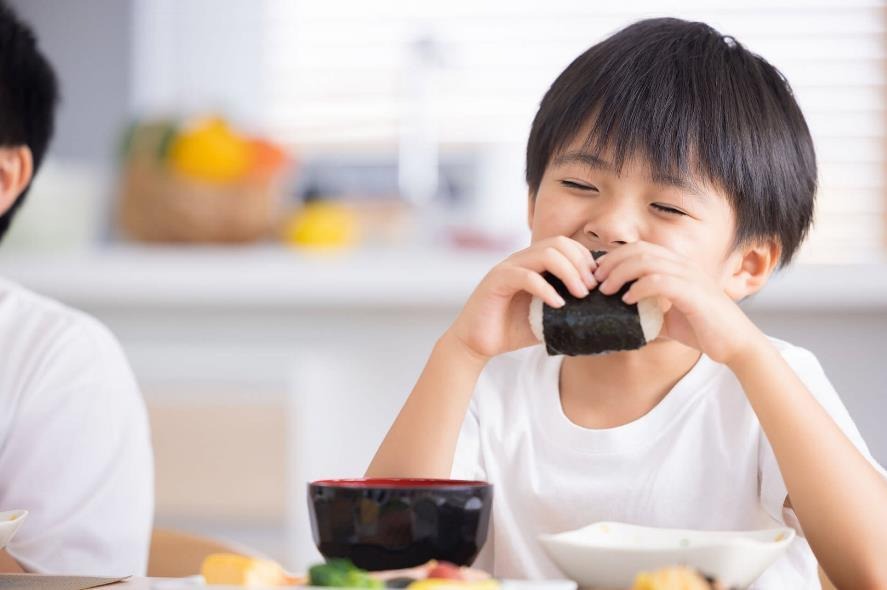
Onigiri is not just delicious—it also has many health benefits. Rice contains not only carbohydrates, but also protein, vitamins, and minerals. When paired with fillings and nori seaweed, it makes a well-balanced meal. Onigiri has a high moisture content, so it is very filling and can help you reduce snacking. It is also gluten-free, so it is easy to use as a staple food if you want to reduce your wheat intake. Onigiri is a uniquely Japanese food culture that is easy, delicious, and healthy.
Try making onigiri with Japan Rice
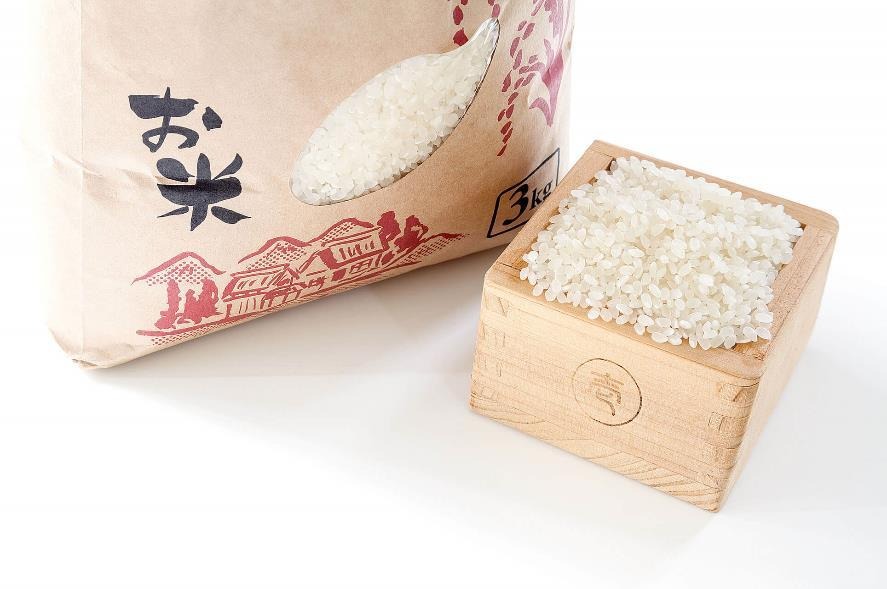
Onigiri can be considered the most versatile food in Japanese cuisine. It is easy to make by just combining rice and your favorite filling, so people outside of Japan can also make it easily. If you find it difficult to cook rice yourself, you can use pre-cooked rice packs that only need to be reheated. Onigiri is a great starter recipe if you want to try making Japanese food.
The key point, however, is to use Japan Rice. It is the stickiness of Japan Rice that makes it possible to shape onigiri any way you like, and the distinctive umami and sweetness of Japan Rice give onigiri their delicious flavor. When cooking rice yourself, it is best to use soft water to bring out the natural flavors of Japan Rice.
*Reference
How to Cook Rice
https://myjapanrice.com/howtocook/
How to Shape Onigiri
https://myjapanrice.com/recipe/onigiri/
Onigiri can be made in your own style and transcend borders.
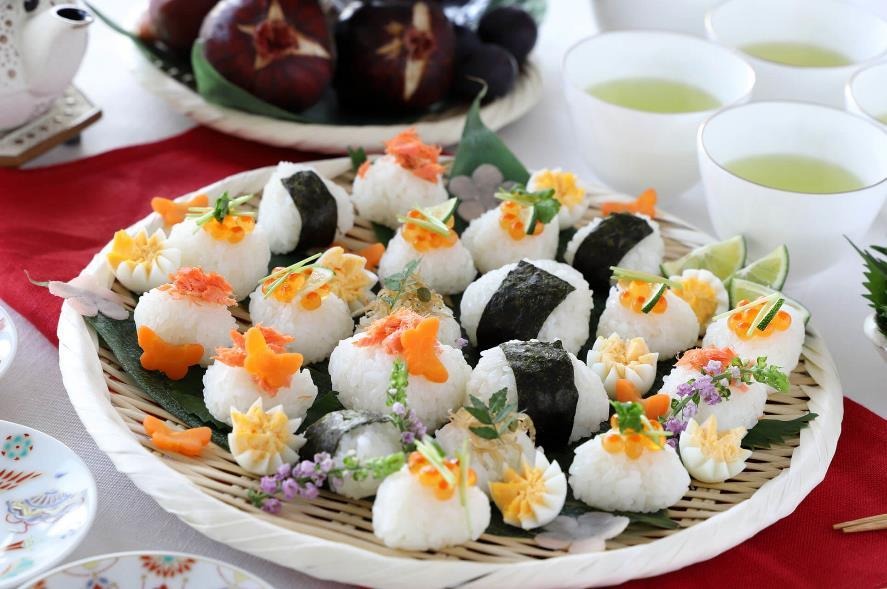
You can enjoy onigiri in different shapes with any filling, so it is a very versatile recipe. It is different from sushi, another famous Japanese food, in that it does not require any complex skills and does not have the strong flavor of vinegared rice, so it goes great with any food.
In addition to Japanese ingredients, you can also use your own country’s food culture to create a local food in your own style, and it is great as a novel party food.
For example, you can wrap rice in uncured ham or lettuce instead of nori, or mix the rice with chicken, finely chopped black olive, and herb vegetables, and sprinkle pink pepper or powdered cheese on top to make the onigiri look vibrant. You can make the rice balls smaller to eat as an appetizer like pinchos, make them in a group while chatting, and do taste comparisons, making it a fun way to interact with others.
Experience new pairings and create your own one-of-a-kind flavors. This is the deliciousness and fun that onigiri can provide.