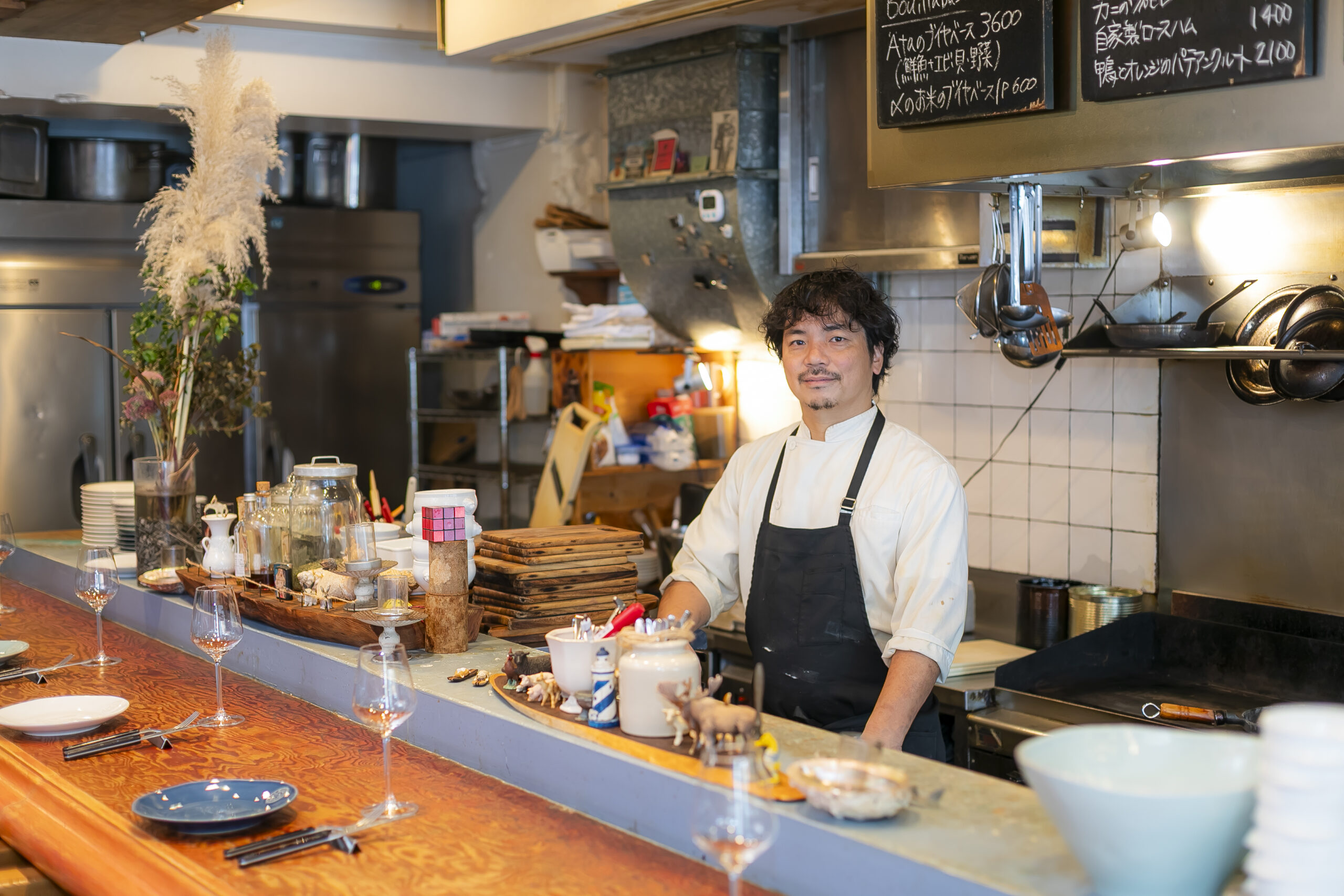

Breathing new life into traditional Kyoto cuisine by prioritizing the space, ingredients, and hospitality
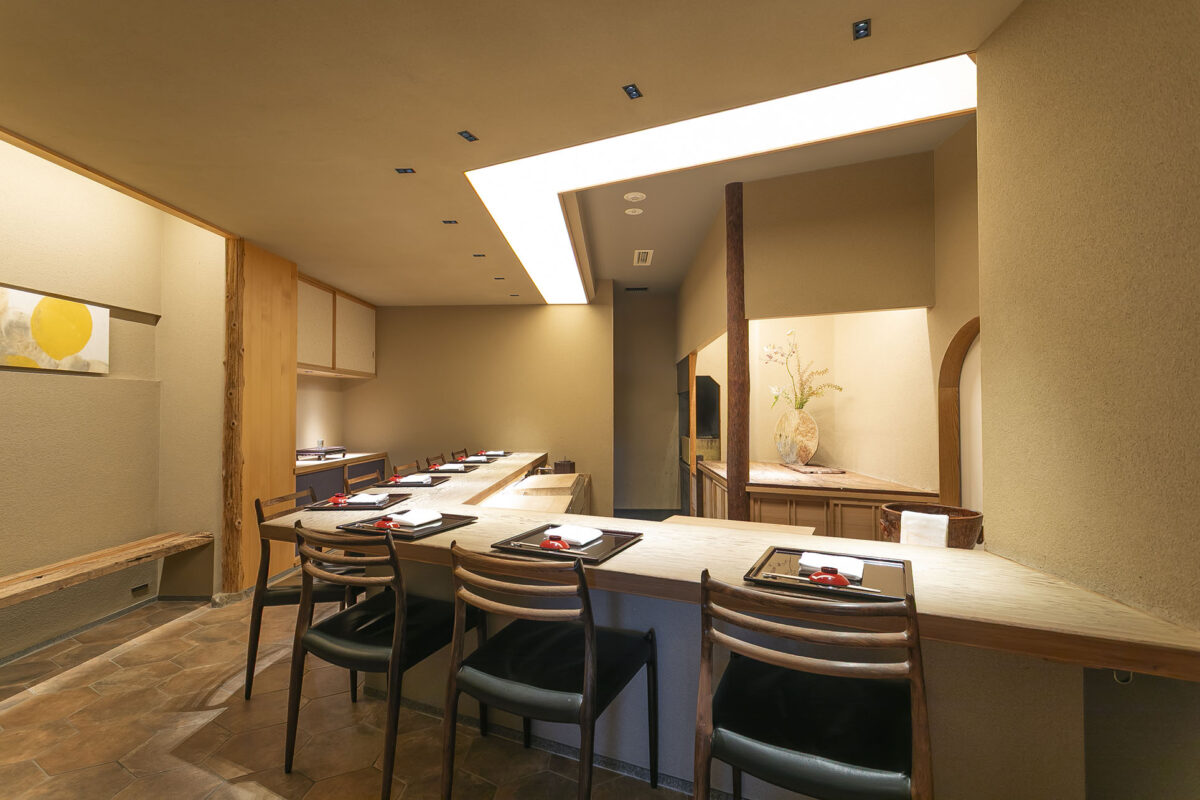
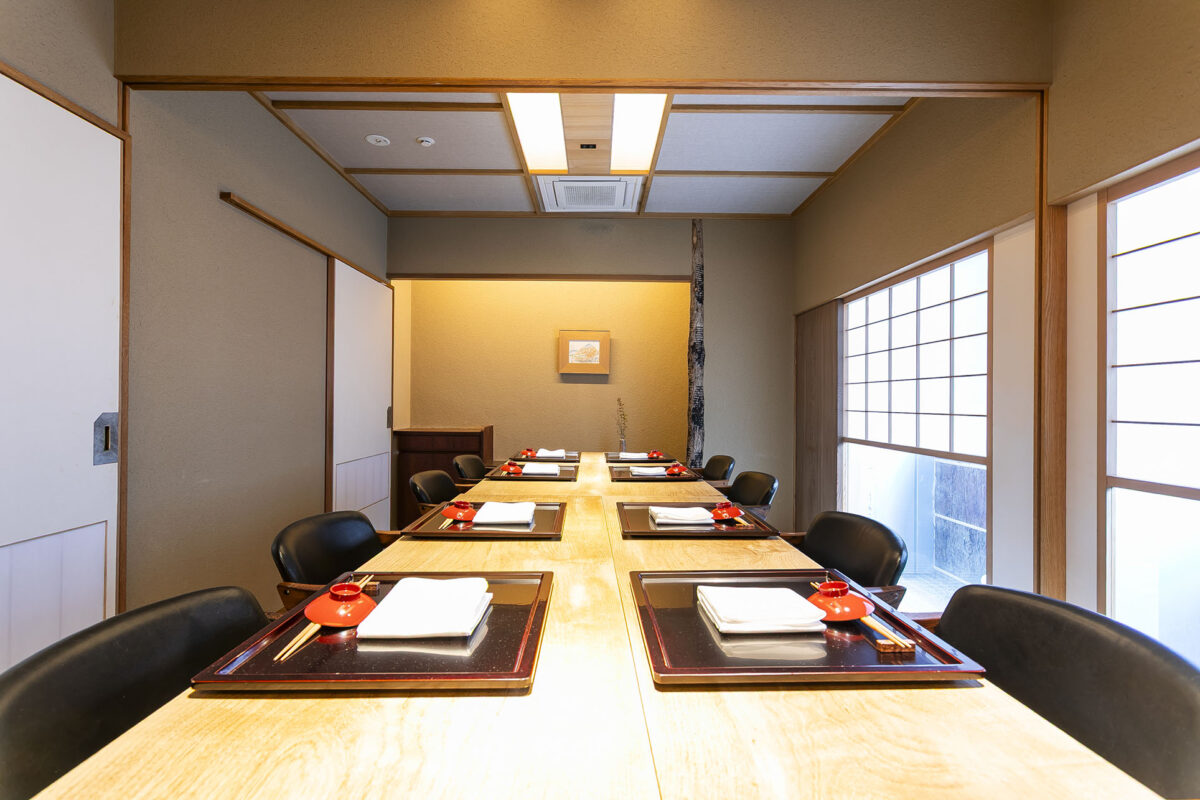
Ginza Fujiyama embodies the concept of “a space where you can experience the atmosphere of the ancient capital of Kyoto in Ginza.” It is a Japanese-style restaurant that received a Michelin star in less than one year since opening. The famous restaurant is on the seventh floor of a building on Ginza Renga-dori Street. When the elevator doors open, you are met by an expansive and graceful space furnished in the traditional Japanese architectural style of Sukiya-zukuri. Further inside, you find a counter made from a single plank of wood, polished with traditional Japanese techniques and paired with vintage chairs made by Niels O. Møller, a Danish furniture designer, in the mid-1900s.
The hanging scrolls, antiques, and flower arrangements are selected for each season and imbued with a deep feeling of attentive hospitality and refined aesthetic sense. The stylish interior blends tradition and modernity in great harmony, creating a welcoming space for customers of all ages, from their 30s to their 80s, and is often used for special occasions and business talks.
Fujiyama is a chef who was born and raised in Kyoto and developed his craft until he was hired as executive chef at Kodaiji Wakuden, a long-established restaurant in Kyoto. He is well-versed in culture, arts, and fine arts. As a “sukisha” (person of refined tastes), he carefully selects every piece inside the restaurant, from furnishings such as the wood for interior materials and furniture, to decorations like antiques and works of art, and even each individual utensil. He sources the best ingredients from all over Japan.
He is also very particular about how to bring out the full flavor of Japan Rice and had a Shigaraki ware potter make a custom earthen pot for cooking rice. He said, “At the end of the course, I serve the guests glistening, freshly cooked white rice. It is a prime luxury.” Fujiyama said that the sweet and chewy Japan Rice itself is the ultimate treat. To preserve the pure taste of the rice, he rarely cooks it with other ingredients in the same pot.
Fujiyama is a chef who was born and raised in Kyoto and developed his craft until he was hired as executive chef at Kodaiji Wakuden, a long-established restaurant in Kyoto. He is well-versed in culture, arts, and fine arts. As a “sukisha” (person of refined tastes), he carefully selects every piece inside the restaurant, from furnishings such as the wood for interior materials and furniture, to decorations like antiques and works of art, and even each individual utensil. He sources the best ingredients from all over Japan.
He is also very particular about how to bring out the full flavor of Japan Rice and had a Shigaraki ware potter make a custom earthen pot for cooking rice. He said, “At the end of the course, I serve the guests glistening, freshly cooked white rice. It is a prime luxury.” Fujiyama said that the sweet and chewy Japan Rice itself is the ultimate treat. To preserve the pure taste of the rice, he rarely cooks it with other ingredients in the same pot.
I have aspired to be a chef since I was a boy.
Being born and raised in Kyoto, I decided to study Japanese-style cuisine.
My mother used to make all of our meals and snacks herself. She made everything, even caramels and cakes, and I think my love for cooking can be traced back to her. There was a time, however, when my father was hospitalized and my mother often left me on my own while visiting him. When I got home, there would be nothing to eat and I would make myself things like eggs. I discovered the joy of making food while playing in the kitchen and imitating my mother. I then started to enjoy looking at the restaurants in the neighborhood. I would peek into cafés and watch them make coffee. I would press my face to the windows of Western-style restaurants, searching for the chefs, thinking how cool they looked and wanting to be just like them.
I first dreamed of becoming a French chef in junior high. I asked my parents to let me train in France, the home of authentic French cuisine, but they told me they wanted me to at least finish high school. I begrudgingly attended high school and continued thinking about cooking, but my feelings eventually changed. I thought, “I am Japanese and was born and raised in Kyoto, a culinary center. Why go to France when I can study Japanese cuisine here?”
After graduating from high school, I began studying Japanese cuisine. I started working at a Japanese-style kappo restaurant in Kiyamachi, Kyoto, from age 18, and developed basic skills. When I was around 24, a friend introduced me to Wakuden, a long-established ryotei restaurant, and I started working there. I was fortunate enough to be hired as head chef at the Muromachi Wakuden at 27 and the Kodaiji Wakuden at 32 and was eventually given the position of executive chef for all Wakuden branches.
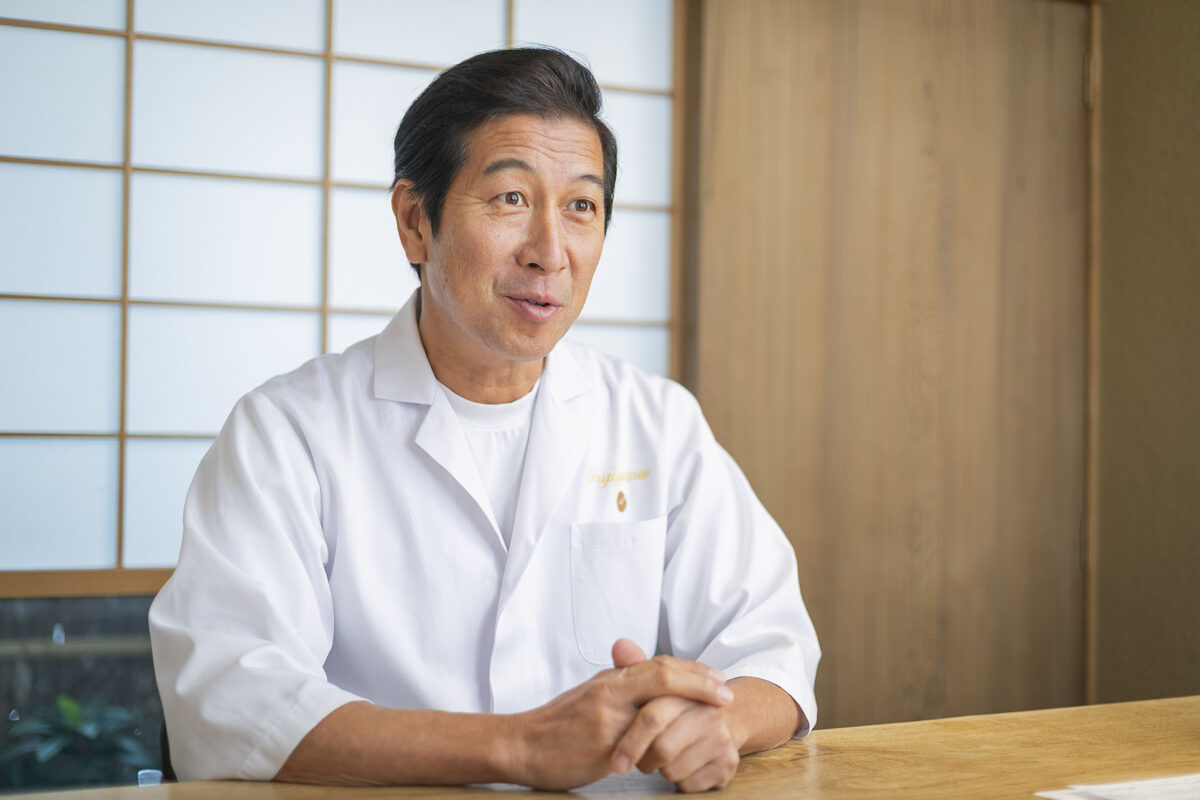
“It is not just about what is on the plate.”
I want to create a pleasant and natural atmosphere for people to enjoy food with hospitality.
I learned so much at Wakuden. Not only sophisticated culinary skills, but also very important points, such as dealing with customers and the hospitality mindset. Specifically, I learned that simply making food is not enough. It is not just about what is on the plate or about the kitchen. The dishes that we create can reach customers only with the support of the service staff, and we can make delicious food only because there are farmers producing excellent ingredients. Before joining Wakuden, I was young and thought the job of chefs was simply to make delicious food. After working there, I developed a sense of gratitude for everything.
Every single flower decorating the restaurant was chosen by the proprietress with great care towards hospitality. The atmosphere inside the restaurant could feel tense, but the moment a customer the moment a customer stepped inside and sat down, greeted by the proprietress, a feeling of relaxation would fill the room. Meals are not simply served. It was at Wakuden that I learned about the importance of relieving tension with careful attention and creating a culture where diners can enjoy the meal.
I established my own restaurant in Tokyo, where the top ingredients in Japan are gathered.
Our dish made with the finest shark fin sourced from Kesennuma received rave reviews.
It was just before my forty-fifth birthday that I decided to become independent. As executive chef, I found it rewarding to train staff, create menus, and manage the restaurant, but I began to feel conflicted with the desire to challenge myself as a chef again. I took a step in a new direction and chose Tokyo as the next stage for myself. I wanted to take on the challenge of working as a solo chef in a place with no Wakuden branches or restaurants run by Wakuden.
Furthermore, Tokyo is the place where all the best ingredients are gathered. Taking advantage of the location, I experimented enthusiastically with ingredients from various regions, including those I had never used before. I gathered excellent ingredients from producers around Japan with strict requirements or beliefs and tried to keep the dishes as simple as possible.
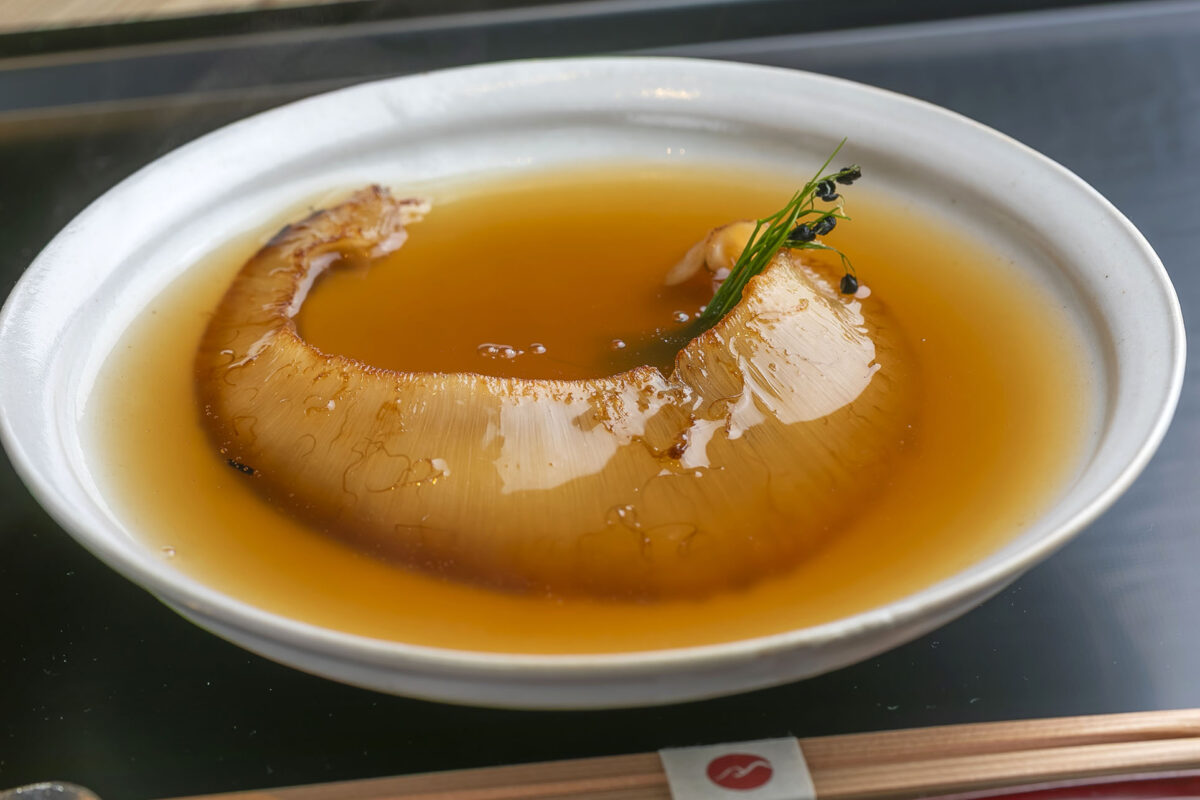
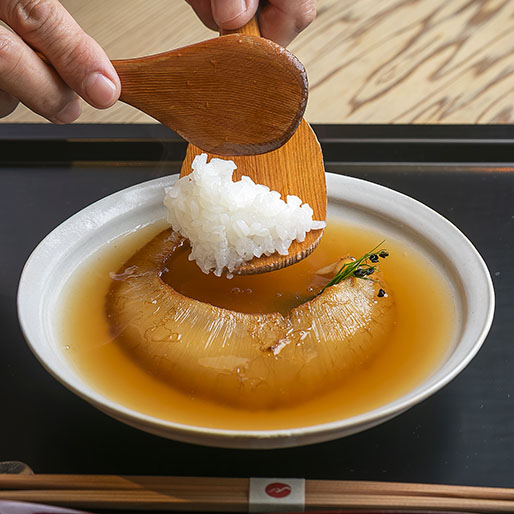
Our signature grilled shark fin with thick sauce uses the finest shark fin sourced from Kesennuma that is grilled until crispy, infused with a rich bonito and kelp broth, and topped with micro-herb rock chives (small herb shoots with a leek flavor). After customers have tasted the shark fin, they are served a tiny portion of white rice at the moment when its aroma and flavor are at their peak, prepared in the custom-made earthen pot for rice cooking by a Shigaraki ware potter. This gourd-shaped earthen pot is less likely to boil over, and the interior is not glazed so that it absorbs just the right amount of water vapor, producing perfectly cooked rice.
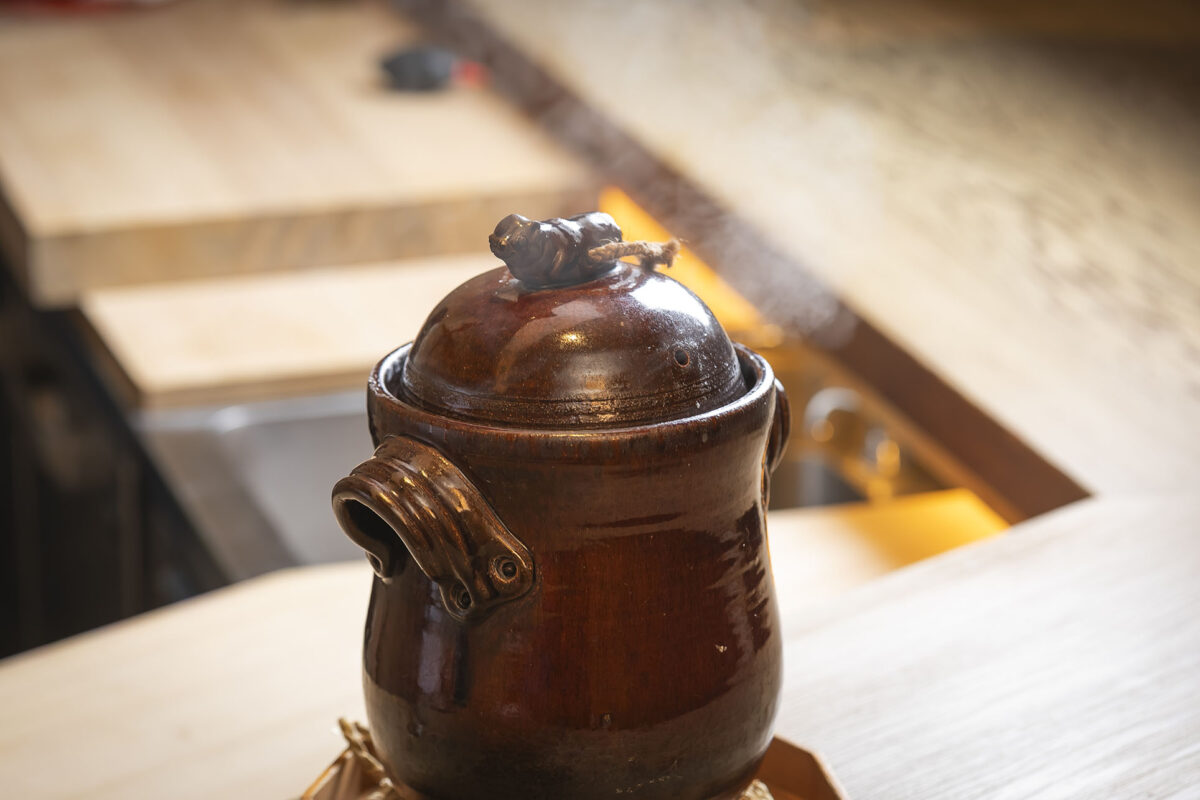
*Originally designed gourd-shaped earthen pot for cooking rice
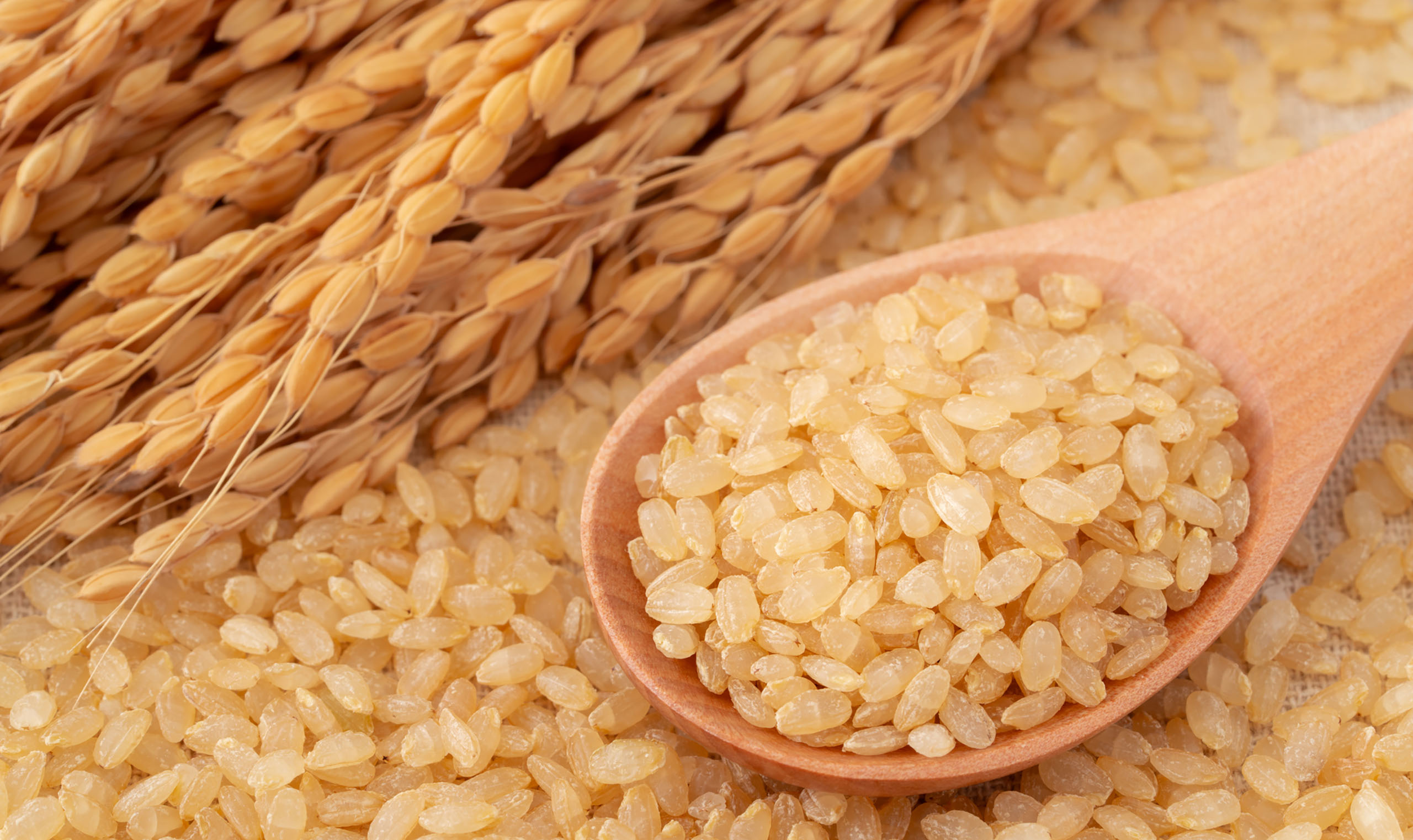
Rice from Japan grows with the blessing of clear water flowing from the mountains.
Using water from the same land makes the rice taste delicious.
Ginza Fujiyama uses Koshihikari rice grown by the Kayamas farmers in Tango, Kyoto. It has a sweetness to it, but it is also smooth and not overly sweet. The grains are large and well-formed when cooked, and the rice is also delicious when cooled.
Water is important when cooking rice, so we use water from the Tango region where the rice is produced. I did not notice this when I worked as a chef in Kyoto, but when I came to Tokyo and tried to make broth, I was surprised at how different it tasted. I felt that adjusting the kelp or bonito to match the water quality was not the answer, because it would completely change the taste, so I decided to have a sake brewery in Tango, Kyoto, send me regular shipments of water for cooking.
Rice tastes different depending on the production area, but major characteristics shared by all Japan Rice are that it is pearly, sticky, and sweet. Those are the Holy Trinity, and using water from the same place is important for cooking rice that is pearly and delicious.
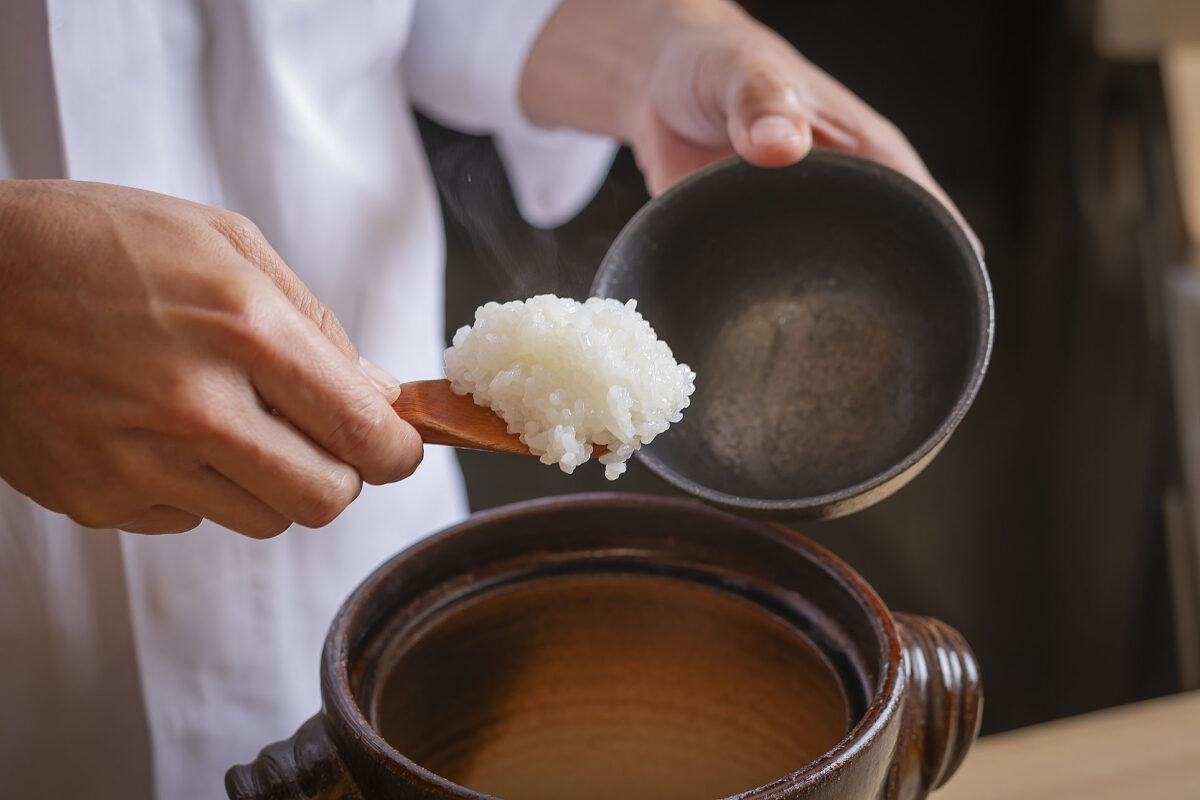
I feel like Japan’s unique culinary history developed purely because rice is so delicious.
There are many ways to eat Japan Rice. Freshly cooked white rice has its own inherent strength, so it complements other strong dishes and is delicious when eaten together with them. The rice is delicious, so it cannot be defeated. On the other hand, it is great with just a light miso soup and pickles or paired with a side dish or rice topping. It is also delicious when eaten alongside other side dishes.
However, it is important to soak the rice well before cooking it. Letting rice soak for 30 minutes or an hour brings out its pearly texture and stickiness much better. You should also be careful not to wash it too much. When you wash rice too much, the grains break and do not taste as good. Japan has soft water, so it is best to use soft water to wash and cook Japan rice.
In my opinion, you should put only a small amount of cooked rice in a bowl at a time and eat it little by little. That way you can enjoy how the flavor of the rice changes over time after cooking.
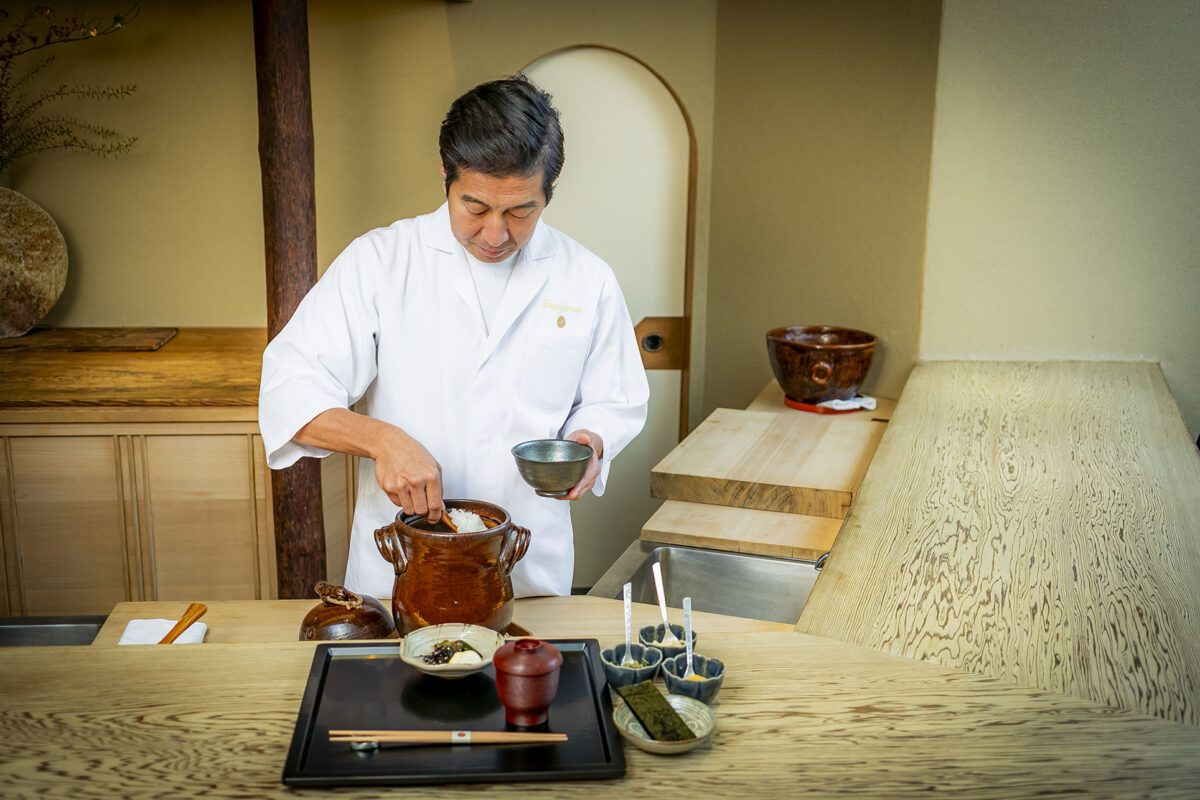
Rice is at the heart of the Japanese soul.
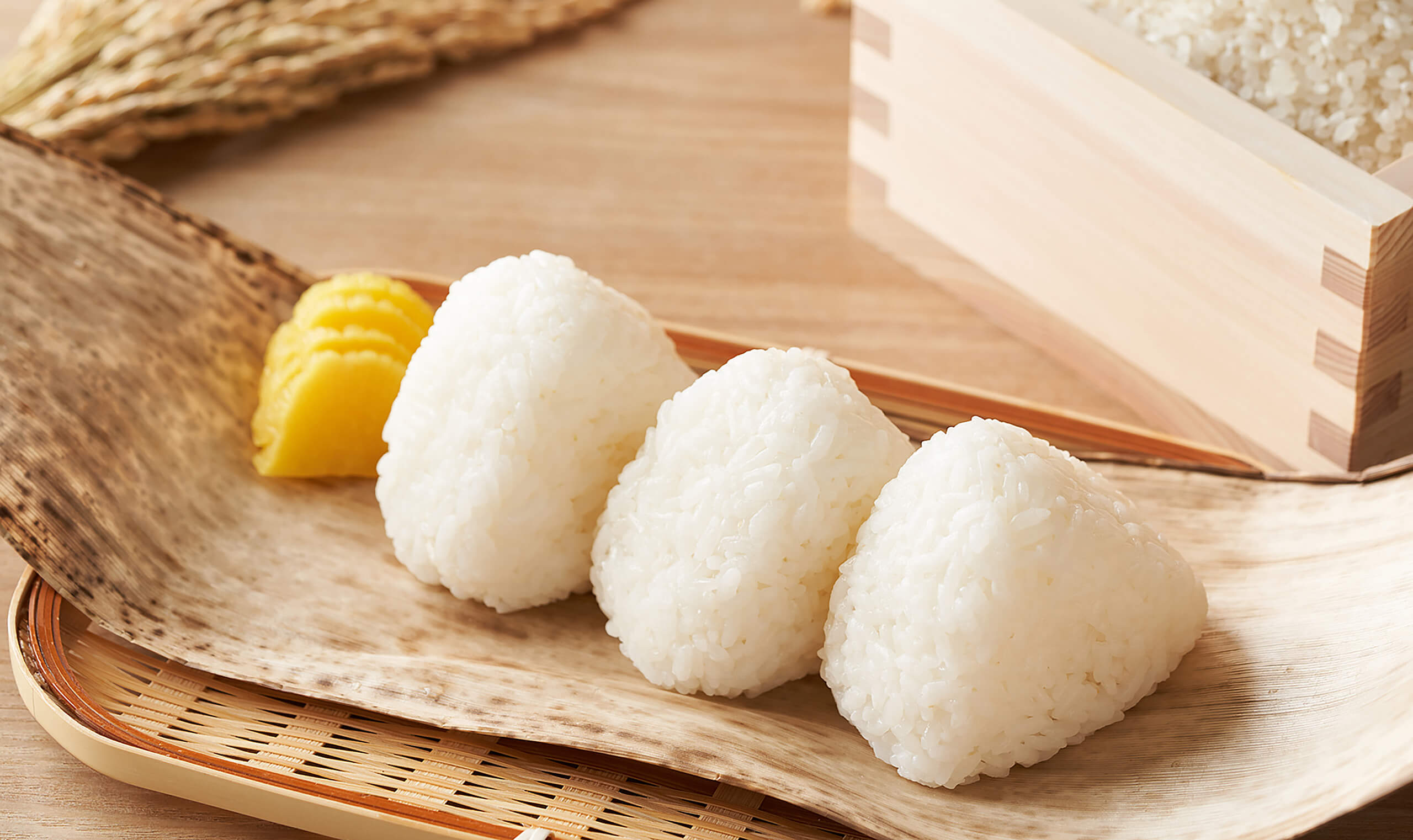
Please enjoy different ways of eating it, such as sushi, rice bowls, and confectionery.
Japan became a country because it had rice. It was through rice farming that religion developed and village communities formed, creating social connections. Rice farming requires collaboration and mutual support, with everyone working together and expressing gratitude. It is this history that led to the development of the Japanese spirit of hospitality.
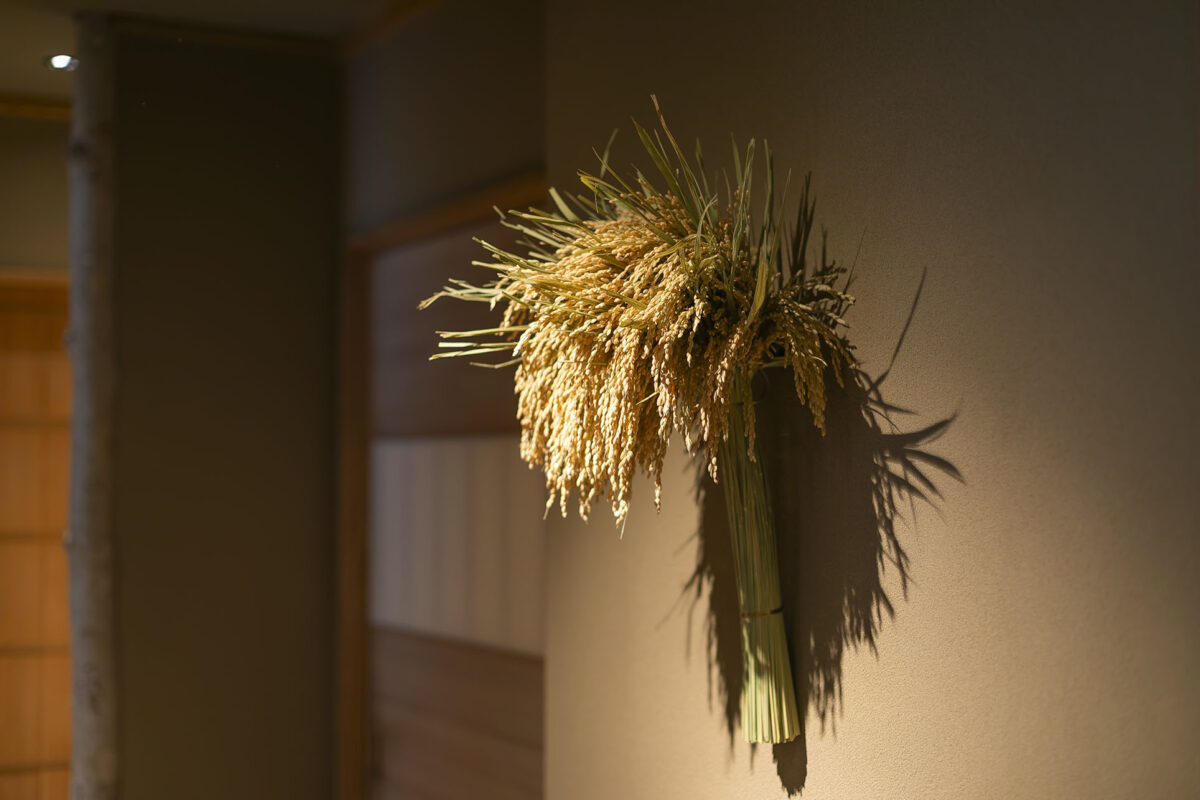
To honor that feeling of gratitude, I decorate the restaurant with rice ear decorations made from the Kayamas’ rice fields every year during the new rice season.
I want people from other countries to enjoy the uniquely delicious taste of Japan Rice. In addition to sushi, there are rice bowls with toppings such as tempura and confections made of rice such as okaki rice crackers and pongashi*. It is a unique feature of Japan that we can enjoy rice in so many different ways. Please experience the culture and sentiment of Japanese people who love rice.
*Japanese confection made by applying pressure to grains like rice and wheat in a grain expander (pressure cooker). It is called pongashi for the “pon” sound you hear when you release the pressure.
Recommended dish
Grilled shark fin with thick sauce 焼きフカヒレのあんかけ
Made with the finest shark fin sourced from a reliable wholesaler in Kesennuma. The shark fin is thoroughly soaked in a rich, flavorful broth made mainly from bonito and kelp, as well as dried scallops, dried shrimp, and dried shiitake mushrooms. The shark fin is grilled until fragrant before it is covered in a light but exquisite thickened sauce to create a new sensation of taste. At Ginza Fujiyama, it is topped with a tiny portion of freshly cooked white rice for guests to enjoy the rich, fragrant flavor of the sauce even more.